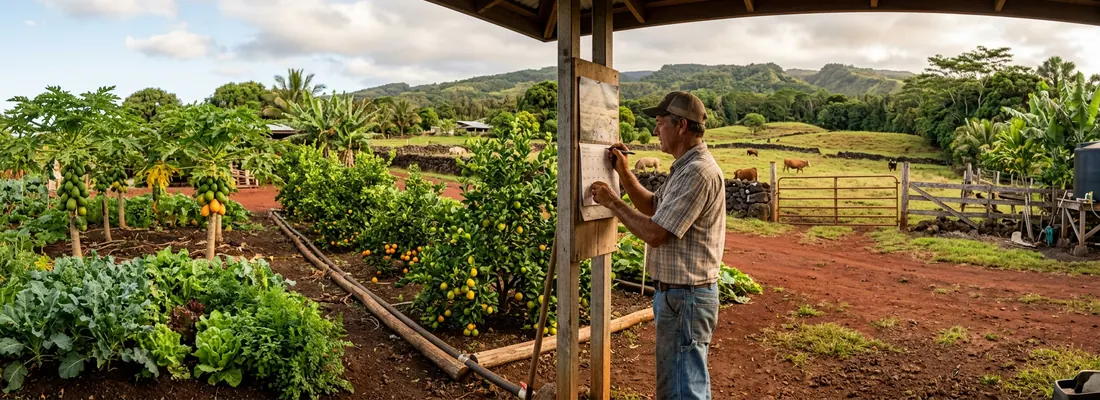
Big Island Planting & Harvesting Schedule: A 12-Month Guide
· Miranda Country Store
Key Takeaways
- Identify your specific microclimate to determine the best planting windows for your district.
- Utilize the wet season for soil preparation and planting heavy feeders like brassicas and root crops.
- Focus on irrigation and pest management during the warmer, drier summer months.
- Maintain ranch infrastructure and pasture health monthly to prevent overgrazing and fence failure.
- Apply fertilizers strategically to account for nutrient leaching in high-rainfall volcanic soils.
Master the Big Island planting and harvesting schedule with our month-by-month guide for farmers and ranchers. Learn how to manage the wet and dry seasons.
The Big Island planting and harvesting schedule is a year-round cycle driven by elevation and rainfall rather than traditional mainland seasons. Growing success depends on matching your crops to the wet season (November–April) or the dry season (May–October) while accounting for specific local microclimates.
Key Takeaways
- Identify your specific microclimate to determine the best planting windows for your district.
- Utilize the wet season for soil preparation and planting heavy feeders like brassicas and root crops.
- Focus on irrigation and pest management during the warmer, drier summer months.
- Maintain ranch infrastructure and pasture health monthly to prevent overgrazing and fence failure.
- Apply fertilizers strategically to account for nutrient leaching in high-rainfall volcanic soils.
What are the unique microclimates of the Big Island?
The Big Island features nearly every climate zone on Earth, ranging from the tropical rainforests of Puna and Hilo to the arid plains of South Kohala and the temperate highlands of Waimea. Your planting schedule must be adjusted based on your specific elevation, average rainfall, and wind exposure.
Growers in Hilo might deal with 130 inches of rain annually, requiring raised beds and excellent drainage. Meanwhile, those in Kona or Waimea often face drier conditions where moisture retention and windbreaks become the primary focus for a successful harvest.
How do you manage the wet season (November–April)?
Management during the Big Island wet season focuses on soil preparation, moisture control, and planting cool-weather crops like lettuce, kale, and broccoli. This period provides natural irrigation, making it the ideal time to establish perennial fruits and manage erosion on sloped volcanic terrain across the island.
Because heavy rains can leach nutrients quickly, this is a critical time to monitor your soil. Using high-quality fertilizer can help replace essential minerals washed away by Hilo or Puna downpours. It is also an excellent time to mulch heavily to protect the soil structure from compaction.
What crops grow best in the winter?
Leafy Greens:
Spinach, Swiss chard, and various lettuces thrive in cooler temperatures.
Root Vegetables:
Carrots, beets, and radishes enjoy the consistent moisture.
Cruciferous Veggies:
Broccoli, cauliflower, and cabbage perform well before the summer heat.
What is the best approach for the dry season (May–October)?
The best approach for the dry season involves prioritizing irrigation, pest monitoring, and heat-tolerant crop selection. As temperatures rise and rainfall decreases in areas like Kona or Kohala, keeping soil moisture consistent becomes the most important task for preventing blossom end rot and plant stress.
Pests such as fruit flies and aphids tend to proliferate in the warmth. Weekly inspections are necessary to keep your garden healthy. If you are struggling with water retention, consider adding organic matter or compost to your beds to act as a sponge during the hottest months of the year.
Which staples are year-round Big Island crops?
Certain tropical staples like breadfruit (ʻulu), papaya, and bananas can be managed year-round on the Big Island. While their growth may slow slightly during cooler months, these resilient plants provide a consistent food source as long as they are fueled by the right animal-derived composts or fertilizers.
Papayas require well-drained soil to avoid root rot, while ʻulu trees benefit from high-potassium feedings to support fruit production. Sweet potatoes (ʻuala) are another fantastic year-round option that helps suppress weeds as a living mulch.
How should a rancher handle monthly maintenance?
Ranchers should handle monthly maintenance by Rotating cattle to prevent pasture depletion and inspecting all fencing for damage from salt spray or vegetation overgrowth. Regular checks of water troughs and mineral lick levels ensure livestock remain healthy regardless of seasonal shifts in forage quality.
Monthly Pasture and Fence Checklist
Fence Inspection:
Check for downed wires or rotting posts after heavy wind events.
Weed Control:
Manage invasive species like fireweed before they go to seed.
Nutrient Management:
Apply lime or pasture fertilizer based on biannual soil tests.
Livestock Care:
Update your supply of animal feed and supplements to match forage availability.
How do you fertilize volcanic soil seasonally?
Fertilizing volcanic soil Requires specialized knowledge because young ʻaʻā and pahoehoe soils are often porous and prone to leaching. You should apply slow-release fertilizers during the wet season to prevent runoff and switch to targeted foliar feeding during the dry season to ensure immediate nutrient uptake.
Our MCS team recommends testing your soil pH regularly. Many Big Island soils are naturally acidic, which can lock up phosphate. Adding lime or dolomite can help balance the pH, making your fertilizers much more effective for your crops and pastures.
Looking for Big Island gardening or ranching supplies?
Whether you are a commercial rancher in Waimea or a backyard grower in Keaʻau, having the right supplies at the right time is the key to a bountiful harvest. From irrigation kits to high-potency fertilizers, our staff is here to help you navigate the unique challenges of farming in Hawaiʻi.
If you have questions about which products are best for your specific district, feel free to contact us or speak with our knowledgeable MCS team for personalized recommendations.
Frequently Asked Questions
When is the best time to plant tomatoes on the Big Island?
The best time to plant tomatoes on the Big Island is generally during the drier months or in the transition between seasons. This helps avoid the high humidity and heavy rains that often lead to fungal diseases and late blight, which are common in wetter districts like Hilo and Puna.
How do I prevent soil leaching during the wet season?
To prevent soil leaching, use slow-release fertilizers and incorporate high amounts of organic matter like compost or biochar. These materials help hold nutrients in the root zone. Additionally, using cover crops or heavy mulching protects the soil surface from being directly washed away by heavy tropical downpours.
What are the easiest vegetables to grow year-round in Hawaiʻi?
The easiest vegetables to grow year-round include sweet potatoes (ʻuala), eggplant, peppers, and leafy greens like bok choy or kale. These plants are well-adapted to the warmth and light levels of the Big Island, though they still require consistent watering and protection from common tropical pests like fruit flies.
Visit Miranda Country Store
Keaau, HI 96749Open in Google Maps →