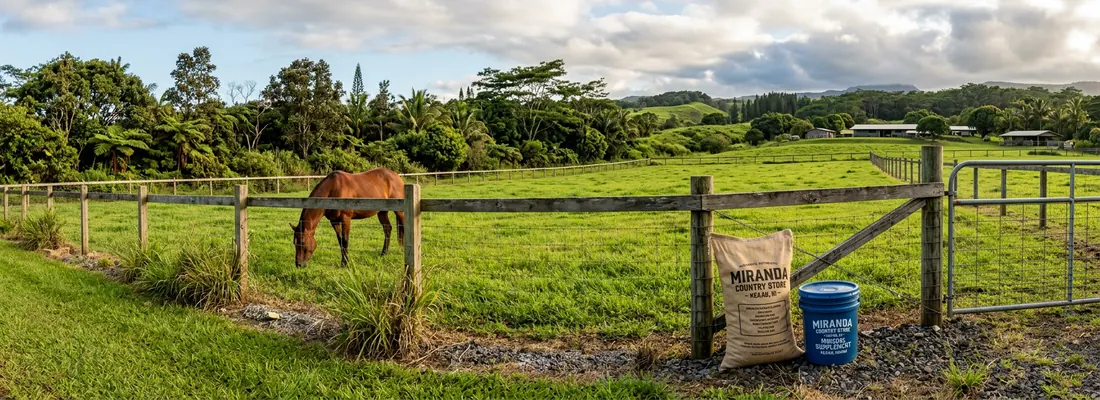
Equine Nutrition: Feeding Horses in Hawaii's Tropical Climate
· Miranda Country Store
Key Takeaways
- Tropical grasses in Hawaiʻi are often high in volume but low in essential minerals like selenium and copper.
- High humidity necessitates constant access to clean water and electrolyte supplementation to prevent dehydration.
- Rotational grazing is vital for managing internal parasites that thrive in our warm, wet climate.
- Customizing feed based on activity level and life stage ensures horses maintain a healthy body condition score.
Learn how to manage equine nutrition in Hawaiʻi, including tips on mineral supplementation for volcanic soils and managing hydration in tropical humidity.
Optimizing equine nutrition Hawaii requires balancing high-moisture tropical forage with essential mineral supplements to offset local soil deficiencies. Because volcanic soils often lack selenium and copper, Big Island horse owners must provide fortified concentrates and electrolytes to maintain health in humid conditions.
Key Takeaways
- Tropical grasses in Hawaiʻi are often high in volume but low in essential minerals like selenium and copper.
- High humidity necessitates constant access to clean water and electrolyte supplementation to prevent dehydration.
- Rotational grazing is vital for managing internal parasites that thrive in our warm, wet climate.
- Customizing feed based on activity level and life stage ensures horses maintain a healthy body condition score.
The Challenges of Equine Nutrition in Tropical Hawaii
Maintaining a healthy horse in the middle of the Pacific presents unique environmental hurdles. Our year-round warm weather means there is no "dormant" season for parasites or bacteria. Furthermore, the lush, green grass you see across the Hāmākua Coast can be deceptive, as it often contains high water content but lacks the structural fiber and minerals found in mainland hay.
Every horse owner on the Big Island knows that "green" does not always mean "nutritious." We deal with rapid forage growth that can lead to sugar spikes or nutrient dilution. Additionally, the constant moisture increases the risk of metabolic issues and hoof sensitivities that require a vigilant approach to daily feeding routines.
Pasture Management: Quality vs. Quantity on the Big Island
How do you manage horse pastures in Hawaiʻi?
Successful pasture management in Hawaiʻi involves rotational grazing to prevent overgrazing and manage parasite loads. Because our tropical climate allows grass to grow rapidly, owners must monitor forage maturity. Older, "rank" grass loses nutritional value, so mowing or rotating paddocks ensures horses consume high-quality, vegetative growth rather than just empty calories.
Soil testing is a smart first step for any rancher. By understanding what is in your dirt, you can apply the right fertilizer to boost forage quality. Overcrowded pastures quickly become mud pits in Keaau or Hilo, so ensuring proper drainage and rest periods for your fields is essential for long-term land health.
The Importance of Mineral Supplementation for Volcanic Soils
Which minerals are horses in Hawaiʻi typically missing?
Horses grazing on Hawaiʻi’s volcanic soils are typically deficient in selenium, copper, and zinc. While our soil is rich in some areas, it often lacks these trace minerals essential for immune function, coat health, and hoof integrity. Supplementing with a high-quality mineral block or fortified feed is necessary to prevent long-term health complications.
Iron levels in our soil can also be exceptionally high. Excessive iron can actually interfere with the absorption of copper and zinc, leading to bleached manes and cracked hooves. Providing a balanced supplement helps bridge this gap, ensuring your horse gets what the grass cannot provide. Our expert team can help you identify which supplements fit your specific district.
Staying Hydrated: Managing Electrolytes in High Humidity
Do horses in Hawaiʻi need extra electrolytes?
Yes, horses in Hawaiʻi need extra electrolytes because high humidity hinders their natural cooling process. When a horse sweats in a humid environment, the sweat does not evaporate quickly, causing the horse to lose more salt and minerals while trying to regulate its body temperature. Supplements help trigger the thirst response and replace lost nutrients.
Always ensure your horse has access to shade and cool, fresh water. If you notice your horse is lethargic or has "tucked up" flanks, they may be dehydrated. Adding a loose salt or a dedicated electrolyte powder to their daily animal feed can make a massive difference in their recovery after a trail ride or heavy work.
Combating Tropical Pests and Skin Issues (Rain Rot and Scratches)
The wet side of the island is famous for skin funk. Rain rot and scratches (dermatophilosis) thrive when the skin is constantly damp. Nutrition plays a huge role here: a horse with a strong immune system supported by proper vitamins and minerals can fight off these fungal and bacterial infections much more effectively than a malnourished one.
In addition to topical treatments, ensure your fencing allows for good airflow in your paddocks. Stagnant air and deep mud are breeding grounds for the bacteria that cause skin issues. Keeping your horse on a consistent plane of nutrition helps maintain the natural oils in their coat, which acts as a first line of defense against our tropical rains.
Choosing the Right Horse Feed for Island Lifestyles
What is the best horse feed for horses in Hawaiʻi?
The best horse feed for Hawaiʻi is a fortified concentrate that complements local forage while providing essential amino acids and minerals. Look for feeds designed for high-moisture environments that include mold inhibitors. The specific choice should depend on your horse’s age, weight, and activity level, focusing on low-starch options for easy keepers.
Whether you have a retired pasture pet or a competitive performance horse, the goal is consistency. Avoid sudden changes in feed, as this can lead to colic. By blending local grazing with high-quality imported grains, you provide a comprehensive diet that supports longevity and performance in our unique island environment.
If you have questions about specific brands or need help calculating the right amount of feed for your herd, please contact us for personalized recommendations.
Frequently Asked Questions
Is Hawaiʻi grass enough for a horse's diet?
In most cases, Hawaiʻi grass alone is not enough for a complete horse diet. While it provides calories, our volcanic soil is often deficient in trace minerals like selenium. Most horses require a fortified feed or a mineral supplement to remain healthy and prevent deficiencies that cause hoof and coat issues.
How do I prevent rain rot on the Big Island?
To prevent rain rot, provide your horse with a dry shelter and ensure their diet is rich in Zinc and Vitamin A to support skin health. Grooming regularly to remove moisture and choosing pastures with good drainage or proper fencing also helps reduce the time their skin stays damp.
Why does my horse need a salt block in Hawaiʻi?
Horses in Hawaiʻi need salt blocks to encourage drinking and replace sodium lost through sweat. Our high humidity causes horses to sweat more frequently to stay cool. Salt helps maintain the correct balance of fluids in their body and prevents dehydration and impaction colic caused by insufficient water intake.
Visit Miranda Country Store
Keaau, HI 96749Open in Google Maps →