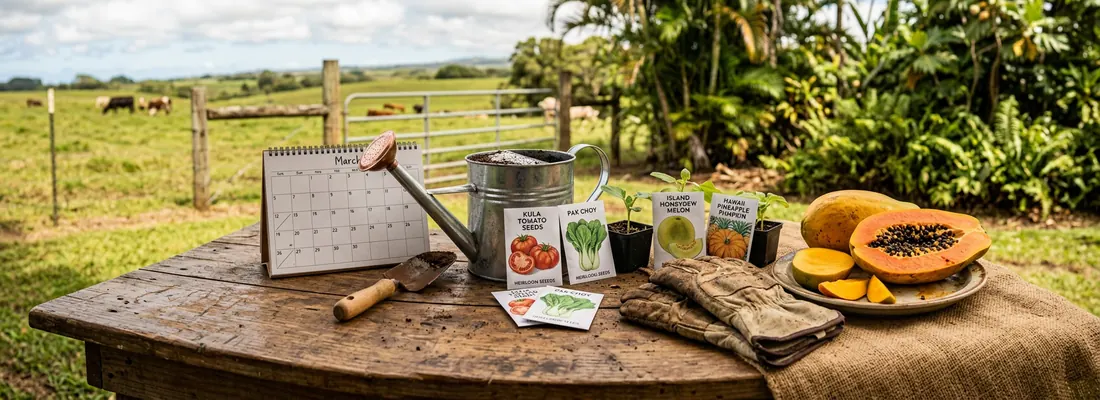
Big Island Farming Calendar: What to Plant and When
· Miranda Country Store
Key Takeaways
- Plant cool-season vegetables like lettuce and broccoli during the cooler, wetter months from November to April.
- Use the summer dry season for heat-loving crops like peppers, eggplant, and sweet potatoes with proper irrigation.
- Apply soil amendments and fertilizers based on volcanic soil testing during transition months like March and October.
- Align ranch maintenance, including fencing repairs and feed storage, with seasonal rainfall shifts to prevent rot and rust.
Master the Hawaii Island planting calendar with our guide to seasonal crops, microclimates, and ranch maintenance for Big Island farmers and gardeners.
A successful Hawaii Island planting calendar follows two primary seasons: the wet season (November to April) and the dry season (May to October). While staples like breadfruit and citrus thrive year-round, cool-weather crops like kale and carrots belong in winter, while heat-tolerant melons and peppers excel in summer.
Key Takeaways
- Plant cool-season vegetables like lettuce and broccoli during the cooler, wetter months from November to April.
- Use the summer dry season for heat-loving crops like peppers, eggplant, and sweet potatoes with proper irrigation.
- Apply soil amendments and fertilizers based on volcanic soil testing during transition months like March and October.
- Align ranch maintenance, including fencing repairs and feed storage, with seasonal rainfall shifts to prevent rot and rust.
Understanding Big Island Microclimates: Puna vs. Kona Cycles
How do microclimates affect the Hawaii Island planting calendar?
Big Island microclimates dictate planting times because rainfall and temperature variations are extreme between regions. Windward areas like Puna and Hilo receive high rainfall, requiring well-drained soil and fungus-resistant varieties, while Leeward areas like Kona demand robust irrigation systems and heat-management strategies to sustain consistent crop growth throughout the year.
In Keaʻau, we often deal with high humidity and consistent moisture. This means your planting calendar might look different than someone in the high elevations of Waimea. Understanding your specific "ahupuaʻa" ensures you are not fighting nature but working with it.
For those in wetter regions, focus on raised beds to prevent root rot. If you are on the drier side of the island, check out our fencing products to help create windbreaks and protect your precious irrigated crops from wild pigs and goats.
The Wet Season (November–April): Crops and Maintenance
What should you plant during the Big Island wet season?
The wet season, spanning November through April, is the ideal time to plant leafy greens, brassicas, and root vegetables. Lower temperatures and frequent rains support crops like kale, Swiss chard, carrots, and beets, which might bolt or wither under the intense sun of the Big Island summer months.
This is also the best time for fruit tree installation. The heavy rains help establish young root systems for citrus, avocado, and lychee without requiring constant manual watering. However, keep an eye on fungal issues during Hilo’s heavy downpours.
Maintenance during this time involves frequent weeding, as the rain makes everything grow faster, including the stuff you do not want. It is also the perfect time to evaluate your drainage and ensure heavy runoff is not eroding your topsoil.
The Dry Season (May–October): Heat Management and Irrigation
How do you manage crops during the Big Island dry season?
Managing crops during the dry season requires focused irrigation and the selection of heat-tolerant varieties like peppers, tomatoes, and beans. Mulching heavily with organic matter helps retain soil moisture, while shade cloths can protect sensitive starts from the intense UV rays found at Hawaiʻi’s tropical latitudes during mid-summer.
Summer is prime time for tropical fruits. Pineapple, mango, and dragon fruit thrive in the heat. If you are growing "staples" like ʻulu (breadfruit), the summer sun provides the energy needed for heavy fruiting cycles.
Ensure your water catchment systems are cleaned and maintained before the driest months hit in August and September. A consistent watering schedule is the difference between a bountiful harvest and a wilted garden during a Hāmākua dry spell.
Month-by-Month Planting Guide for Big Island Staples
Using a Hawaii Island planting calendar helps you stay organized. Here is a general guide for our local favorites:
January - March:
Plant lettuce, tomatoes, cucumbers, and green beans. This is also a great time to apply heavy fertilizer and soil amendments to prep for spring growth.
April - June:
Transition to sweet potatoes (ʻuala), eggplant, and corn. Start your melon seeds now so they mature during the hottest months.
July - September:
Focus on tropical tubers and nitrogen-fixing cover crops. This is the peak season for harvesting avocado and mango.
October - December:
Begin planting cabbage, broccoli, and herbs like cilantro and parsley that prefer the cooling evening temperatures.
Ranch Maintenance Calendar: Fencing and Feed Storage Timing
When is the best time for Big Island ranch maintenance?
Ranch maintenance should be scheduled around the wet season to maximize structural longevity. Build or repair fences during the dry months of June through September when the ground is firm. Conversely, inspect and waterproof your animal feed storage areas before the November rains begin to prevent mold and pest infestations.
Low-land pastures in Puna can become boggy in the winter, making fence post installation difficult. If you plan on expanding your paddocks, aim for the late summer. This also ensures your livestock has secure boundaries before winter storms arrive.
Protecting your investment means keeping your feed dry. Humidity is the enemy of nutrition. Always store your bags on pallets and inside airtight containers, especially during the high-moisture months of the winter season.
Fertilizer and Soil Amendment Cycles for Volcanic Land
How often should you fertilize volcanic soil in Hawaiʻi?
Volcanic soil requires fertilization every three to four months due to high leaching rates from heavy rainfall. Applying a balanced fertilizer or organic compost during the transition months of March and October allows nutrients to settle in before the peak growing seasons, ensuring your plants have consistent access to essential minerals.
Because Big Island soil can be acidic, especially in fern-heavy areas, testing your pH is vital. You may need to add lime to boost alkalinity. Our our team can help you identify the right blend for your specific area, whether you are on raw lava or deep soil.
If you have questions about which products are right for your specific crop or livestock needs, please contact us for personalized advice from our local experts.
Additional Resources and Citations
- Natural Farming Hawaiʻi: University Publications
- UH CTAHR Free Publications
- Kuleana Hawaiʻi Moon Calendar Planting Guide
Frequently Asked Questions
What are the best vegetables to grow year-round on the Big Island?
In Hawaiʻi, heat-tolerant greens like Choy Sum, herbs like rosemary and Thai basil, and root crops such as ginger and turmeric can grow year-round. While specific varieties perform better in certain seasons, the lack of frost allows for continuous production of most tropical perennials and hardy vegetables across the island.
When is the best time to plant fruit trees in Hawaiʻi?
The best time to plant fruit trees on the Big Island is at the beginning of the wet season, typically between November and January. The consistent rainfall helps the young trees establish strong root systems without the stress of summer heat, leading to better survival rates and faster growth for the long term.
How does the Big Island rainy season affect livestock feed?
The rainy season increases humidity, which can lead to rapid mold growth and spoilage in livestock feed. It is crucial to store feed in elevated, airtight containers and buy in smaller quantities during the wet months to ensure your animals receive fresh, nutrient-dense nutrients without the risk of respiratory issues or poisoning.
Visit Miranda Country Store
Keaau, HI 96749Open in Google Maps →