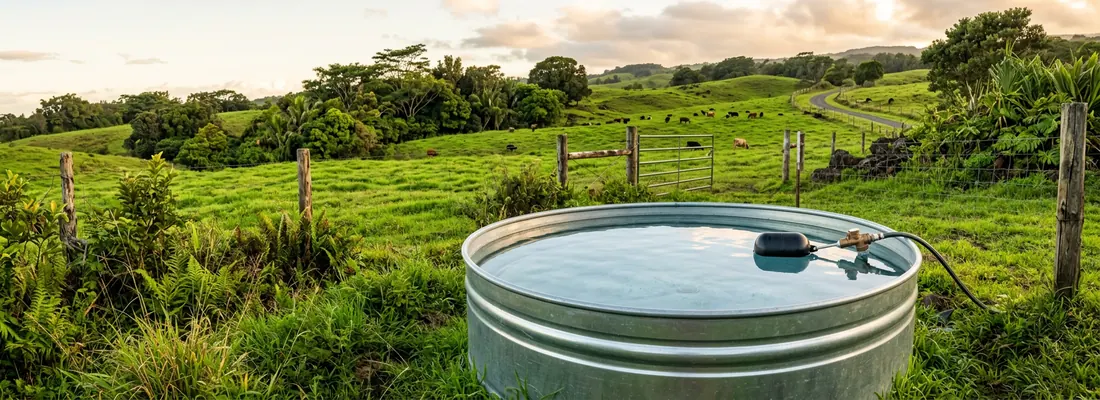
Clean & Cool: Livestock Water Maintenance in Hawaii
· Miranda Country Store
Key Takeaways
- Regular scrubbing and shading are essential to limit algae growth in tropical heat.
- Rain catchment systems require active pH monitoring and filtration for livestock safety.
- Investing in durable, UV-resistant hardware prevents frequent damage from intense sun and volcanic emissions.
- Effective mosquito management in troughs protects your herd from local insect-borne illnesses.
Learn how to manage livestock water troughs in Hawaii's tropical climate, from algae control and rain catchment pH balancing to mosquito prevention.
Maintaining livestock water troughs Hawaii ranchers use requires frequent cleaning, strategic shading, and algae control to combat high humidity and heat. Ensuring fresh, cool water improves animal health, increases weight gain, and prevents the spread of waterborne diseases common in tropical climates like the Big Island.
Key Takeaways
- Regular scrubbing and shading are essential to limit algae growth in tropical heat.
- Rain catchment systems require active pH monitoring and filtration for livestock safety.
- Investing in durable, UV-resistant hardware prevents frequent damage from intense sun and volcanic emissions.
- Effective mosquito management in troughs protects your herd from local insect-borne illnesses.
The Importance of Water Quality in Hawaii's Humidity
Why does water quality matter for Big Island livestock?
Clean water is vital for livestock in Hawaii because high humidity and temperatures increase the risk of bacterial growth and dehydration. Quality hydration supports healthy digestion, milk production, and heat regulation. Contaminated water leads to decreased intake, which can cause significant health issues and reduced productivity for local ranchers.
On the Big Island, our animals face unique environmental stressors. From the salty air of the coastline to the cool dampness of the Hāmākua Coast, water quality remains the most critical factor in herd management. When water becomes stagnant or dirty, livestock will drink less, leading to lower weight gains and poor health.
Providing access to clean water helps your animals thrive despite the heat. If you are noticing a decline in health, check your paddock rotation and water source accessibility. Proper hydration is the foundation of every successful agricultural operation.
Managing Algae Growth in Tropical Stock Tanks
How can you stop algae growth in Hawaii livestock water troughs?
To stop algae growth, place troughs in shaded areas to limit sunlight and use natural additives like apple cider vinegar or copper sulfate. Regular scrubbing every one to two weeks is necessary to remove organic buildup. Proper placement away from direct sun significantly slows the photosynthesis process that fuels algae blooms.
Algae thrives in the intense sunlight of areas like Kona and Keaau. While some algae is harmless, certain blue-green varieties can be toxic to cattle, horses, and small ruminants. Scrubbing the sides of the tank with a stiff brush and a mild bleach solution can keep the surface clean.
Goldfish or tilapia are sometimes added to larger tanks to eat algae and mosquito larvae. However, ensure the water level remains high enough to support them and that the fish do not interfere with the float valve. For more advice on keeping your environment clean, speak with the our team about safe cleaners.
Rain Catchment for Livestock: Balancing pH and Purity
Is rain catchment water safe for livestock in Hawaii?
Rain catchment is safe for livestock if producers monitor for acidity caused by volcanic emissions and maintain clean gutter systems. Our island's "Vog" can lower the pH of rainwater, making it acidic and potentially leaching metals from hardware. Using limestone or mineral blocks can help neutralize acidic catchment water effectively.
Many Big Island ranchers rely on catchment due to the lack of municipal lines in rural areas. It is a sustainable practice, but it requires diligent maintenance. Organic debris like leaves and bird droppings often wash into tanks, introducing bacteria that can sicken your herd.
Testing your water pH regularly is a good habit. If the water is too acidic, it can affect the taste and discourage animals from drinking. Adding high-quality minerals to their diet can also help balance the deficiencies sometimes found in pure rainwater systems.
Essential Hardware: Durable Float Valves and Troughs
What are the best water troughs for Hawaii's climate?
The best water troughs for Hawaii are made of heavy-duty, UV-stabilized polyethylene or galvanized steel with protective coatings to resist rust and sun damage. Durable float valves with stainless steel or high-density plastic components are essential to withstand the corrosive effects of volcanic gases and salt air found on the islands.
Standard plastic tanks can become brittle and crack under the constant UV exposure of the tropical sun. Investing in high-quality hardware saves money in the long run by preventing leaks and dry tanks. A failed float valve can lead to a drained tank and a thirsty herd before you even notice there is a problem.
Consider the size of your herd when choosing a trough. Cattle require significantly more water than sheep or goats, especially during the dry summer months. Sturdy troughs that cannot be easily tipped over or damaged by hooves are a must for any Big Island pasture.
Mosquito and Pest Control in Standing Livestock Water
How do you control mosquitoes in livestock troughs?
Control mosquitoes by ensuring water is constantly refreshed and using mosquito dunks containing Bti, a biological control safe for livestock. Preventing stagnant water is the most effective method. Alternatively, keeping the water surface agitated or using small fish can prevent larvae from reaching adulthood and spreading diseases to your animals.
Mosquitoes are more than just a nuisance; they carry diseases like avian pox or heartworm that can affect various animals on your farm. In wet regions like Hilo and Puna, mosquito populations can explode overnight. Keeping your livestock water troughs Hawaii systems clean is your first line of defense.
Regularly dump and refill smaller buckets or troughs to break the mosquito life cycle. For larger tanks, ensure the area around the trough is well-drained. Muddy wallows around the water station often become breeding grounds for pests and harmful bacteria.
Maintenance Checklist for Hawaii’s Wet and Dry Seasons
Maintaining your water systems requires different approaches depending on the time of year. Our seasons can change quickly, moving from heavy rain to intense dry spells.
Wet Season:
Focus on clearing gutters for catchment and ensuring troughs do not overflow and create mud holes.
Dry Season:
Check float valves daily to ensure water is flowing and Increase frequencies of algae cleaning.
Monthly:
Inspect all connections and hoses for leaks or sun damage.
Quarterly:
Deep clean the main storage tanks and check the pH levels of your catchment supply.
Proper nutrition also goes hand-in-hand with hydration. Check our selection of animal feed to ensure your livestock are getting the minerals they need to stay healthy through every season.
If you have questions about the best water solutions for your specific pasture or need to upgrade your current setup, we are here to help. Our staff understands the unique challenges of ranching on the Big Island and can help you find the right equipment for your needs.
Contact us today to learn more about our available stock tanks and ranching supplies.Frequently Asked Questions
How often should I clean my livestock water trough?
In Hawaii's warm climate, you should scrub your livestock water troughs every one to two weeks. Frequent cleaning prevents the buildup of harmful algae, bacteria, and mosquito larvae. If the water appears cloudy or green, or if there is visible debris, it should be cleaned immediately to ensure animal health.
Can I use bleach to clean my water tanks?
Yes, a diluted bleach solution (about 2-3 ounces per 50 gallons) can be used to clean and sanitize troughs. Ensure you scrub the surfaces thoroughly and rinse the tank completely before refilling it for livestock use. This helps kill persistent bacteria and algae spores that manual scrubbing might miss.
How much water does a cow need in Hawaii?
A beef cow typically needs 10 to 20 gallons of water per day, but this can increase significantly during Hawaii's hot, humid summer months. Lactating dairy cows may require up to 30 or 50 gallons daily. Always ensure your troughs have enough capacity and a reliable refill system to meet these needs.
Visit Miranda Country Store
Keaau, HI 96749Open in Google Maps →