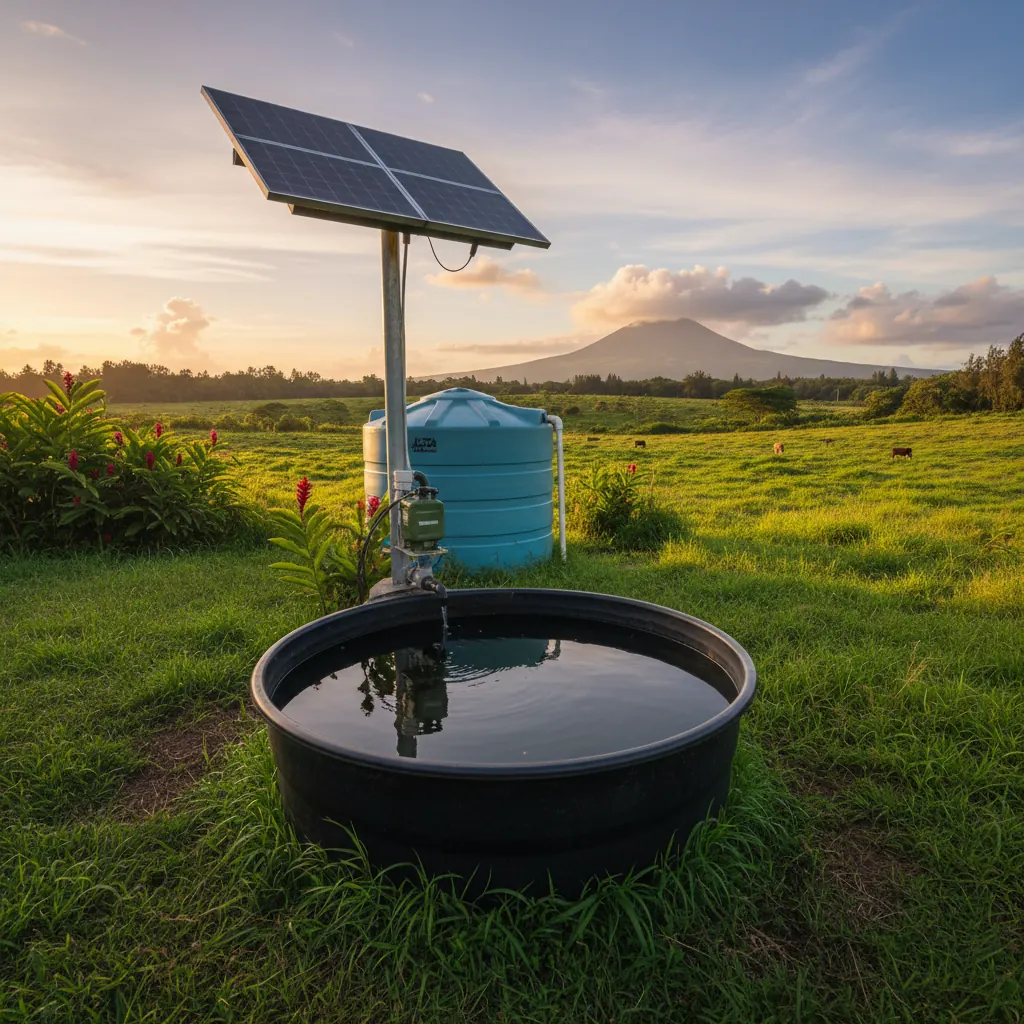
Hydrating Hawaii: Livestock Water Management & Catchment
· Miranda Country Store
Key Takeaways
- ✓Calculate water needs based on 1 to 2 gallons per 100 lbs of animal weight.
- ✓Utilize rainwater catchment systems to overcome remote pasture limitations.
- ✓Clean troughs weekly to prevent algae and waterborne diseases.
- ✓Strategically place water sources to encourage even grazing across paddocks.
- ✓Monitor water acidity and cleanliness during heavy Vog (volcanic smog) periods.
Learn how to master livestock water management in Hawaiʻi, from calculating daily needs to setting up effective rainwater catchment systems for your Big Island ranch.
Effective livestock water management in Hawaiʻi requires strategic rainwater catchment, regular cleaning to prevent algae, and accounting for high humidity levels. Ranchers must provide 1 to 2 gallons of water per 100 pounds of body weight daily, adjusted for life stage and local heat indices.
Key Takeaways
- Calculate water needs based on 1 to 2 gallons per 100 lbs of animal weight.
- Utilize rainwater catchment systems to overcome remote pasture limitations.
- Clean troughs weekly to prevent algae and waterborne diseases.
- Strategically place water sources to encourage even grazing across paddocks.
- Monitor water acidity and cleanliness during heavy Vog (volcanic smog) periods.
The Challenges of Livestock Hydration in Hawaiʻi's Tropical Climate
While the Big Island is known for its lush landscapes: water availability varies significantly between the windward and leeward sides. High humidity and consistent heat increase the metabolic demand for water in cattle, sheep, and goats. Without a reliable system: heat stress can quickly lead to reduced weight gain and lower reproductive success.
Managing water in the tropics means dealing with rapid evaporation and biological growth. Parasites and bacteria thrive in warm, stagnant water: making constant circulation or frequent refills a necessity. Hawaiʻi ranchers must balance natural rainfall with mechanical distribution to ensure every animal stays hydrated throughout the year.
How much water do cattle, sheep, and goats need daily in Hawaiʻi?
In Hawaiʻi, beef cattle typically require 10 to 20 gallons of water per day, while sheep and goats need 1 to 3 gallons. These requirements increase significantly for lactating animals or during periods of extreme heat. Always provide a consistent supply to prevent dehydration and maintain healthy rumen function.
When calculating your needs: consider the moisture content of your forage. During the wet season in Hilo: livestock may get a portion of their hydration from lush grass. However: during dry spells or in lower elevations: supplemental water must be readily available to compensate for drier forage. You can find high-quality tanks and troughs in our animal feed and care department.
Rainwater Catchment Systems for Big Island Ranches
Many pastures on the Big Island are located far from municipal water lines. This makes rainwater catchment the backbone of local agriculture. A standard system consists of a collection surface (usually a roof), a storage tank, and a distribution line to various paddocks.
To maximize efficiency: ensure your tank size matches the local rainfall patterns and your herd size. It is better to have excess storage during the rainy season than to run dry during a localized drought. Proper fencing around your catchment area is also vital to prevent livestock from damaging the infrastructure or contaminating the primary source.
What are the best materials for livestock water catchment tanks?
The best materials for livestock water catchment in Hawaiʻi are food-grade polyethylene or corrugated galvanized steel with high-quality liners. These materials resist UV damage from the intense tropical sun and prevent chemicals from leaching into the water. Poly tanks are popular for their durability and ease of installation in remote areas.
Maintaining Water Quality: Preventing Algae and Disease
Warm temperatures and sunlight are the perfect recipe for algae blooms. While some algae are harmless: blue-green algae (cyanobacteria) can be toxic to livestock. Regularly scrubbing troughs and using biological controls or approved water cleaners can keep the water safe.
Stagnant water also serves as a breeding ground for mosquitoes and snails: which can carry diseases or parasites. Keeping the water moving or using automatic float valves ensures fresh water is always entering the system. Our experienced team can help you choose the right valves and filtration components for your specific elevation.
How can you prevent algae growth in livestock troughs?
To prevent algae growth, place troughs in shaded areas to limit sunlight exposure and scrub them weekly with a stiff brush. Using gold fish or adding small amounts of copper sulfate (where appropriate for the species) can also help. Ensure the water remains fresh by using automatic float valves to trigger refills.
Strategic Trough Placement for Better Grazing Distribution
Where you put your water is just as important as how much you have. Livestock tend to congregate near water sources: which can lead to overgrazing and soil compaction in those areas. By strategically placing troughs: you can "pull" the herd to underutilized sections of your pasture.
In a rotational grazing system: portable water troughs are a game changer. If you can move your water source along with your cattle or sheep: you ensure they always have access to hydration without trekking back across the entire paddock. This reduces energy expenditure for the animals and protects your soil health.
Managing Water During Volcanic Smog (Vog) Events
Vog can impact water quality by increasing acidity and leaving a layer of fine ash on the surface of open troughs. While most livestock are resilient: prolonged exposure to highly acidic water can affect health and productivity. During heavy Vog events: monitoring the pH of your catchment water is a wise practice.
Covered storage tanks are the best defense against volcanic particulates. If your animals are drinking from open ponds or troughs: consider more frequent cleaning or adding limestone to help neutralize acidity. Keeping your pasture nutrients balanced can also help livestock better handle the environmental stress of volcanic activity.
Ensuring your herd has clean, reliable water is the foundation of a successful ranch. Whether you need new troughs, float valves, or catchment supplies, we are here to help you build a system that lasts. Stop by and talk to us about your hydration goals today!
Frequently Asked Questions
How do I calculate the catchment surface area needed for my livestock?
To calculate area, use the formula: 1 inch of rain on 1,000 square feet of roof yields approximately 600 gallons of water. Multiply your daily herd requirement by the longest expected dry spell to determine the storage capacity and roof size needed to keep tanks full during Hilo's dry periods.
Is it safe to use Hilo rainwater for all types of livestock?
Yes, rainwater is generally safe for livestock in Hawaiʻi, provided it is collected from clean surfaces and stored in food-grade tanks. Regular maintenance is required to filter out debris. During periods of heavy volcanic activity (Vog), you should monitor water pH levels to ensure the water hasn't become overly acidic.
How often should I clean my livestock water troughs in Hawaiʻi?
Water troughs in Hawaiʻi should be scrubbed and cleaned at least once a week. The high humidity and warm temperatures promote rapid algae growth and bacterial buildup. Regular cleaning prevents the transmission of waterborne diseases and ensures that animals do not reduce their intake due to poor water palatability.
Visit Miranda Country Store
Keaau, HI 96749Open in Google Maps →