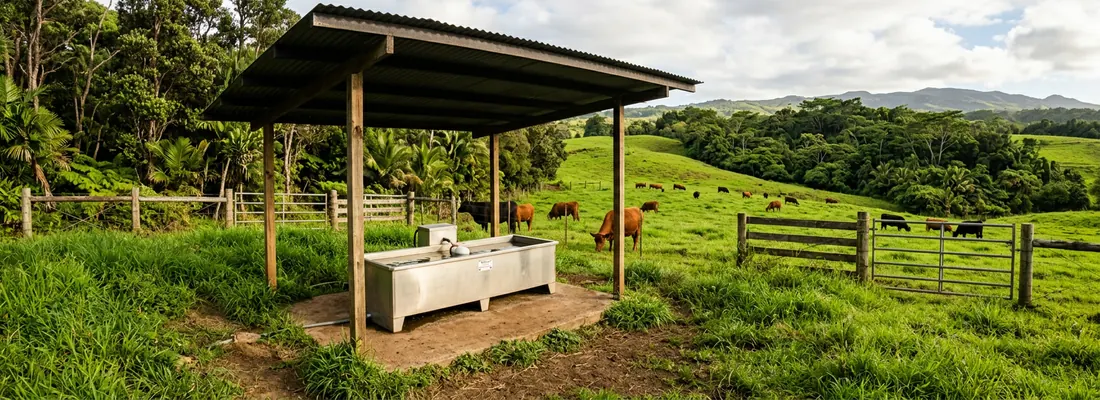
Heat & Hydration: Managing Tropical Livestock Water
· Miranda Country Store
Key Takeaways
- Shade troughs to keep water cool, as livestock drink significantly less when water temperatures exceed 80 degrees.
- Use consistent cleaning schedules and copper sulfate or barley straw to mitigate rapid algae growth in humid conditions.
- Solar-pumping systems are the most reliable way to move water across remote volcanic terrain and off-grid pastures.
- Select corrosion-resistant materials like UV-stabilized polyethylene to withstand high salt air and humidity.
- Perform weekly inspections on float valves and pipes to prevent leaks that can quickly drain expensive catchment tanks.
Properly managing livestock water systems in tropical climates is essential for animal health and productivity. Learn how to control water temperature, prevent algae, and maintain off-grid systems.
Managing livestock water systems for tropical climates requires a focus on temperature control, algae prevention, and reliable infrastructure. On the Big Island, producers must utilize shaded troughs, high-flow valves, and durable materials like heavy-duty plastic or galvanized steel to ensure animals stay hydrated during humid, high-temperature periods.
Key Takeaways
- Shade troughs to keep water cool, as livestock drink significantly less when water temperatures exceed 80 degrees.
- Use consistent cleaning schedules and copper sulfate or barley straw to mitigate rapid algae growth in humid conditions.
- Solar-pumping systems are the most reliable way to move water across remote volcanic terrain and off-grid pastures.
- Select corrosion-resistant materials like UV-stabilized polyethylene to withstand high salt air and humidity.
- Perform weekly inspections on float valves and pipes to prevent leaks that can quickly drain expensive catchment tanks.
Why is water temperature critical for livestock in hot climates?
Maintaining cool water temperature is vital because livestock consumption drops as water heat rises. In the tropical heat of Hawaiʻi, water trapped in exposed pipes or troughs can quickly exceed 90 degrees Fahrenheit, leading to dehydration, heat stress, and reduced weight gain. Animals prefer water between 40 and 65 degrees for optimal intake.
For ranchers in areas like Hilo or Kona, the sun can turn a black plastic trough into a heater. Positioning troughs under natural tree canopies or artificial shade structures is the most effective way to manage temperature. Additionally, burying your primary water lines at least 12 to 18 inches underground prevents the "tepid water" effect common in surface-laid pipes.
You may also consider high-volume float valves. These allow for a faster refresh rate, ensuring that as cattle or horses drink, fresh and cooler water from the source replaces the sitting water immediately. This constant turnover is a simple but effective cooling strategy.
How can you mitigate algal growth in tropical water troughs?
To mitigate algal growth in tropical troughs, you should provide shade to block photosynthesis and establish a bi-weekly scrubbing routine. Using food-grade additives like apple cider vinegar or specifically labeled copper sulfate products can also suppress blooms without harming your animals or damaging your fencing infrastructure near the water station.
Algae thrive in the intense sunlight and high humidity of the Big Island. Beyond being unsightly, certain blue-green algae can be toxic to cattle, sheep, and goats. If you notice a thick green "soupy" consistency, it is time for a complete drain and scrub using a stiff brush and a mild bleach solution.
Properly managed fertilizer and herbicide use in nearby paddocks is also important. Ensure that runoff from fertilized pastures does not enter your open water sources, as nitrogen and phosphorus act as fuel for massive algae blooms. Keeping your water source clean is the first step in high-quality animal feed and care.
Are solar-powered pumping solutions right for off-grid Hawaiʻi ranches?
Solar-powered pumping solutions are ideal for off-grid Hawaiʻi ranches because they provide a reliable, low-maintenance way to move water across remote acreage without fuel costs. These systems utilize the high solar irradiance of the islands to power submersible pumps that fill header tanks during daylight hours, ensuring gravity-fed water availability 24/7.
When designing these systems, sizing is everything. You need enough solar panel wattage to account for "voggy" days or heavy cloud cover common in the Hāmākua district. A large header tank acts as your "battery," storing thousands of gallons of water at a high elevation so that your livestock always have access even if the sun is hidden for a day or two.
Modern solar pumps are surprisingly durable. Most systems now feature dry-run protection, which automatically shuts the pump off if the well or catchment source runs low. This protects your investment from burning out during our occasional dry spells.
How do you maintain water quality during the rainy vs. dry season?
Maintaining water quality involves different strategies for each season: in the rainy season, you must prevent mud and sediment runoff from contaminating troughs, while the dry season requires monitoring for increased mineral concentration and bacterial bloom. Regular flushing of sediment traps and cleaning of catchment gutters is essential for year-round safety.
During heavy Hilo rains, the area around the trough can become a "mud wallow." This mud often ends up in the water, introducing bacteria and parasites. Installing a gravel or concrete pad around the watering station helps keep the water clean and protects the hooves of your livestock.
In the dry season, water levels in tanks drop, often concentrating dust and organic matter. This is the time to be extra vigilant about checking your filters. If you rely on catchment, ensure your "first flush" diverter is working properly so the first bit of rain after a dry spell doesn't wash roof debris into your clean storage.
What are the best trough materials for corrosion resistance?
The best materials for corrosion resistance in Hawaiʻi are UV-stabilized polyethylene and heavy-duty galvanized steel with an added protective coating. These materials withstand the high salt content in the air and the intense UV radiation that causes standard plastics to become brittle and crack over time.
UV-Stabilized Poly:
Lightweight, easy to move, and completely rust-proof. Perfect for coastal ranches.
Concrete:
Extremely durable and keeps water cooler due to its thermal mass, though very difficult to relocate.
Galvanized Steel:
Strong and resistant to physical damage from larger livestock, but must be monitored for rust at the seams.
What are some quick tips for weekly water system maintenance?
Weekly water system maintenance should include checking float valves for debris, inspecting visible pipe joins for leaks, and scrubbing the interior of troughs. Briefly observing livestock while they drink can also alert you to potential water quality issues if they seem hesitant or if the water has an unusual odor.
Leaking pipes are the silent killer of a ranching budget. A small leak can waste hundreds of gallons a day, which is especially critical if you are paying for county water or relying on limited catchment. Carry a small toolkit and extra washers whenever you do your fence line checks.
If you have questions about the best setup for your specific pasture or herd size, the MCS team is always here to help. We can guide you toward the right fittings and trough sizes for your specific location on the island.
If you need help selecting the right components for your Hawaiʻi ranch water system, please contact us today for expert advice and local solutions.
Frequently Asked Questions
How much water does a cow need in the Hawaiʻi heat?
In the warm climate of Hawaiʻi, a lactating beef cow may require 20 to 30 gallons of water per day. During periods of extreme heat or high humidity, this requirement can increase significantly. Always provide "ad libitum" access to ensure they can drink whenever necessary to regulate body temperature.
Can I use goldfish to control algae in my livestock troughs?
While some ranchers use goldfish to eat algae, it is generally not recommended for large-scale operations. Fish waste can increase bacterial loads and nitrogen levels in the water. Furthermore, if troughs are not cleaned, the fish can die and contaminate the entire water source, posing a health risk to your livestock.
How do I prevent my water pipes from getting too hot?
To prevent water pipes from getting too hot, bury your PVC or poly lines at least 12 inches deep. If pipes must be above ground, use insulated sleeves or paint them with white, reflective UV-resistant paint. Keeping pipes out of direct sunlight ensures that the water delivered to the trough remains cool.
Visit Miranda Country Store
Keaau, HI 96749Open in Google Maps →