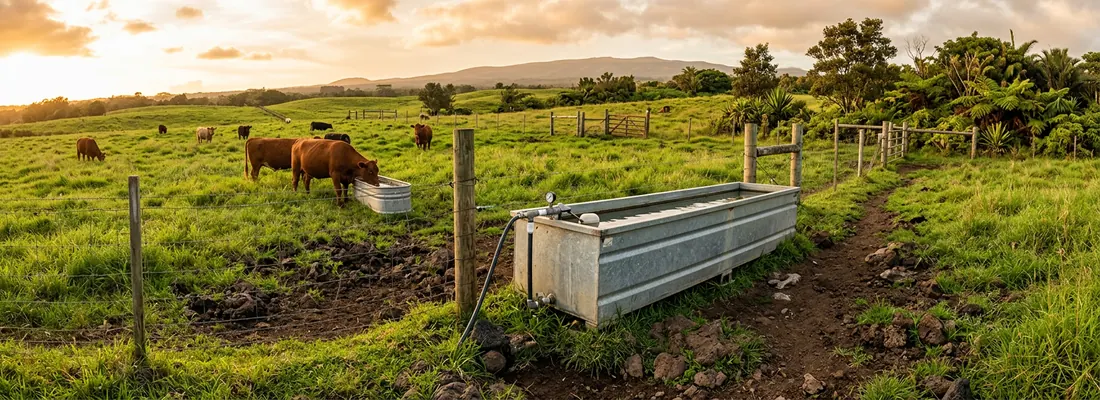
Mastering Tropical Water Systems for Big Island Livestock
· Miranda Country Store
Key Takeaways
- Calculate daily water needs based on peak summer temperatures and humidity levels.
- Use UV-stabilized piping and light-blocking troughs to prevent algae and sun damage.
- Take advantage of Big Island topography by implementing gravity-fed distribution.
- Maintain water cleanliness using goldfish or consistent flushing to prevent mosquito breeding.
- Select heavy-duty valves and fittings that withstand the corrosive salt air of the islands.
Learn how to design and maintain effective tropical livestock watering systems on the Big Island. From calculating water needs to managing algae, we cover everything Hawaiʻi ranchers need to know.
Designing effective tropical livestock watering systems requires balancing high humidity with heat stress management. A successful system uses UV-resistant components, maintains consistent water pressure across varied terrain, and implements natural or mechanical filtration to prevent rapid algae and mosquito growth in the warm Hawaiʻi climate.
Key Takeaways
- Calculate daily water needs based on peak summer temperatures and humidity levels.
- Use UV-stabilized piping and light-blocking troughs to prevent algae and sun damage.
- Take advantage of Big Island topography by implementing gravity-fed distribution.
- Maintain water cleanliness using goldfish or consistent flushing to prevent mosquito breeding.
- Select heavy-duty valves and fittings that withstand the corrosive salt air of the islands.
The Unique Challenges of Tropical Livestock Hydration
Producers on the Big Island face high humidity, intense UV radiation, and volcanic soil that makes trenching difficult. Unlike mainland systems, tropical setups must handle rapid bacterial growth and mosquito larvae while ensuring water stays cool despite the tropical sun beating down on exposed infrastructure.
How does the Hawaiʻi climate affect water quality?
The Hawaiʻi climate promotes rapid algae blooms and bacterial growth due to year-round warmth and high sunlight levels. Additionally, standing water becomes a primary breeding ground for mosquitoes that carry diseases. Managing water quality requires keeping troughs shaded or using light-blocking materials to prevent photosynthesis from fueling algae cycles.
Calculated Water Requirements for Cattle, Pigs, and Goats in Humidity
In the heat of Hilo or the humidity of Kona, livestock require more water than standard mainland charts suggest. Dehydration leads to poor growth, low milk production, and heat stroke.
Beef Cattle:
High-producing cows may need 20 to 30 gallons daily during peak humidity.
Pigs:
Market hogs generally require 2 to 5 gallons, but lactating sows can exceed 8 gallons.
Goats and Sheep:
Typically require 2 to 3 gallons but will drink more when browsing dry forage.
Always ensure your animal feed and care routine includes easy access to these quantities. When animals eat dry feed, their thirst increases significantly, making reliable troughs essential.
What are the peak water needs for livestock in the tropics?
Peak water needs for tropical livestock occur when temperatures exceed 80 degrees Fahrenheit with high humidity. In these conditions, cattle can consume double their normal intake to maintain thermoregulation. Always design your storage capacity to hold at least three days of peak-demand water to account for pump failures or dry spells.
Algae and Mosquito Control: Keeping Water Clean and Safe
Clean water is the foundation of herd health. Biological controls, such as adding a few goldfish to large troughs, can effectively manage mosquito larvae and algae without chemicals.
For those who prefer mechanical solutions, frequent flushing and scrub-downs are necessary. High-quality fencing products can also be used to create controlled access points to water, preventing animals from defecating directly into larger natural water sources.
How can you prevent algae growth in stock tanks?
To prevent algae growth in stock tanks, eliminate sunlight penetration by using solid-colored, UV-resistant troughs or building simple shade structures. You can also use food-grade barley straw extract or copper sulfate blocks cautiously. Regular cleaning and ensuring a high turnover rate of water through the tank are the most effective strategies.
Gravity-Fed vs. Pumped Systems for Big Island Terrains
The slopes of Mauna Kea and Hualālai offer a distinct advantage for gravity-fed systems. By placing large storage tanks at higher elevations, ranchers can distribute water across hundreds of acres without the need for constant electricity.
Pumped systems are often necessary for coastal properties or flat lands in Keaʻau. Hybrid systems using solar-powered pumps to fill high-elevation tanks are becoming the gold standard for sustainable ranching in Hawaiʻi.
When should you choose a gravity-fed watering system?
A gravity-fed watering system is the best choice when your property has elevation changes and you want to minimize mechanical failures. Gravity systems provide consistent pressure without electricity, making them ideal for remote pastures. They require an uphill storage reservoir, such as a catchment tank, to provide the necessary head pressure for downstream troughs.
UV-Resistant Plumbing: Choosing the Right Pipes and Fittings
The intense sun in the islands can make standard PVC brittle in just a few years. For long-term tropical livestock watering systems, high-density polyethylene (HDPE) or UV-stabilized PVC is required.
When selecting your specialized hardware and fertilizer or paddock supplies, ensure every fitting is rated for outdoor exposure. Buried lines are always preferred to keep water cool and protect the pipe from heavy machinery or animal hooves.
Which materials are best for tropical water lines?
The best materials for tropical water lines are High-Density Polyethylene (HDPE) or Schedule 80 UV-resistant PVC. HDPE is particularly favored for Big Island rocky terrain because it is flexible, resists cracking during minor earth shifts, and handles high pressure. These materials withstand the intense UV rays and corrosive volcanic soils better than standard plumbing grade pipes.
Maintenance Checklist for Tropical Watering Systems
Consistent maintenance prevents emergency water hauling during a drought. A monthly inspection should include checking float valves for mineral buildup and ensuring there are no leaks in the feeder lines.
- Inspect float valves for debris or salt corrosion.
- Check tank foundations for erosion caused by animal traffic.
- Test pump pressure and solar panel cleanliness.
- Scrub troughs to remove biofilm and sediment.
- Monitor soil moisture around buried lines to detect hidden leaks.
If you need help selecting the right components for your specific acreage, contact us today. Our experienced members of the MCS team can help you calculate the flow rates and pressure requirements for your specific Big Island location.
Frequently Asked Questions
How much water does a cow need per day in Hawaiʻi?
A beef cow in Hawaiʻi typically needs 15 to 25 gallons of water per day, but this can reach 30 gallons in high heat or during lactation. Consistently providing cool, clean water is essential for maintaining health and weight gain in the humid tropical climate of the Big Island.
Are solar water pumps worth it for Big Island ranchers?
Yes, solar water pumps are highly effective for Big Island ranchers because they utilize abundant sunlight to move water to remote pastures without expensive electrical infrastructure. They are low-maintenance and provide a reliable way to fill header tanks for gravity-fed distribution systems across varied ranch terrains.
How do I keep mosquitoes out of my livestock water?
To keep mosquitoes out of livestock water, ensure troughs are emptied and scrubbed weekly or use biological controls like mosquito fish or goldfish. You can also use "mosquito dunks" containing Bti, a natural bacteria that kills larvae but is safe for livestock, pets, and wildlife to drink.
Visit Miranda Country Store
Keaau, HI 96749Open in Google Maps →