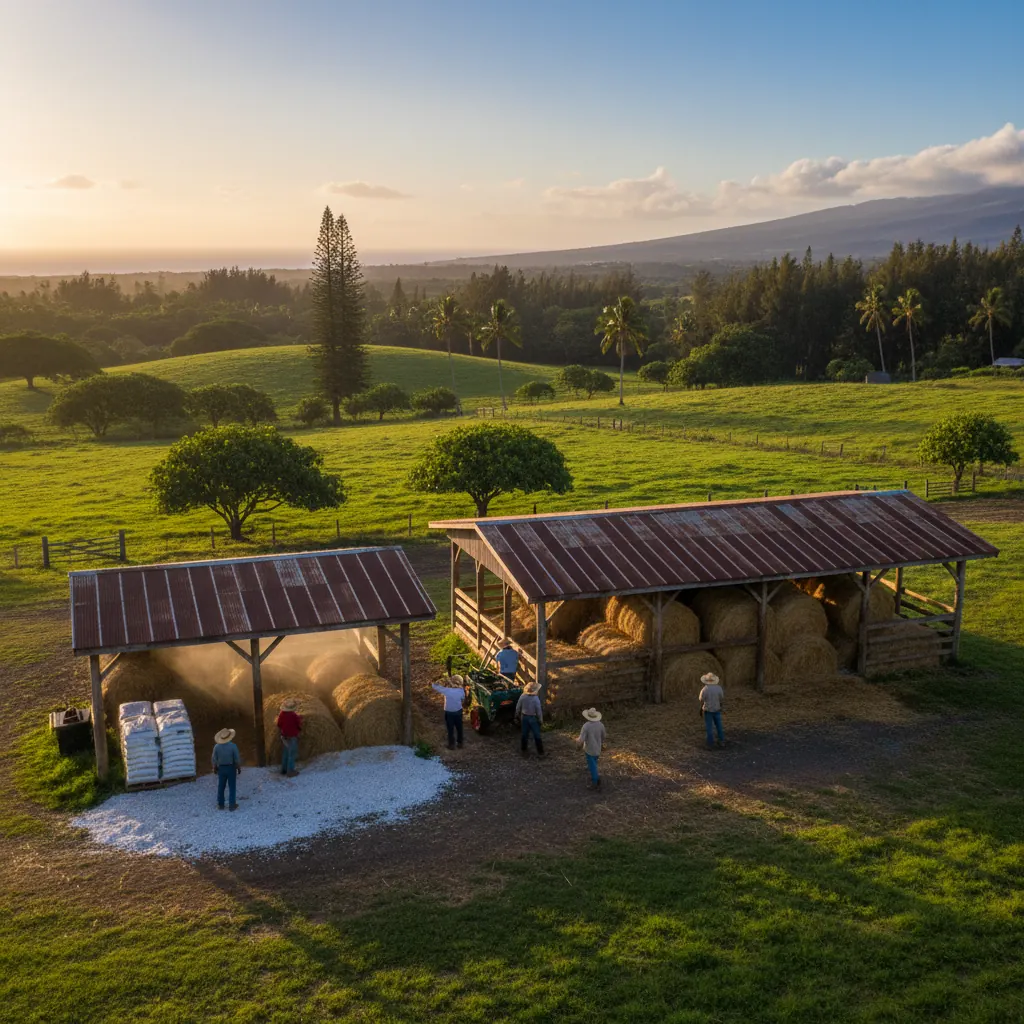
Beat the Heat: Managing Hay & Feed in Hawaii’s Humidity
· Miranda Country Store
Key Takeaways
- The Humidity Challenge: Why Big Island Feed Spoils Faster
- Choosing the Right Storage Containers: Metal vs. Heavy-Duty Plastic
- Ventilation Tactics to Prevent Spontaneous Combustion and Mold
- Pest Control: Protecting Your Investment from Tropical Rodents and Insects
- Inventory Management: The ‘First-In, First-Out’ Rule for Tropical Ranches
- Signs of Spoilage: When to Toss Your Hay or Grain
Learn how to protect your livestock feed and hay from Hawaii's high humidity with our expert tips on storage, ventilation, and pest control.
The Humidity Challenge: Why Big Island Feed Spoils Faster
Living on the Big Island means dealing with a diverse range of microclimates, from the dry heat of Kona to the lush, rainy stretches of Hilo and Puna. While the tropical lifestyle is a dream for us, it can be a nightmare for your livestock feed and hay. High humidity acts as a catalyst for mold growth, nutrient degradation, and insect infestations.
In Hawaii, the relative humidity often lingers above 70%. When moisture levels in hay or grain rise, it creates a breeding ground for fungi. Not only does this ruin your investment, but feeding moldy animal feed to your horses, cattle, or goats can lead to severe respiratory issues and colic. Understanding the unique challenges of tropical feed storage is the first step toward keeping your animals healthy and your ranch profitable.
Choosing the Right Storage Containers: Metal vs. Heavy-Duty Plastic
When it comes to tropical feed storage tips, your choice of container is your first line of defense. Raw bags of grain left on a pallet are essentially an open buffet for moisture and pests.
Metal Bins:
Galvanized steel bins are excellent for keeping out rodents. Mice and rats in Hawaii can chew through almost anything, but they can't get through metal. However, be cautious: in direct sunlight, metal bins can heat up significantly, causing condensation inside. Always keep metal bins in a shaded, well-ventilated area.
Heavy-Duty Plastic:
High-density polyethylene (HDPE) bins with airtight gaskets are fantastic for Hilo’s wet weather. They don't rust and are excellent at keeping moisture out. Ensure they have a locking mechanism to prevent clever local pests (or even curious pigs) from sliding the lid off.
Ventilation Tactics to Prevent Spontaneous Combustion and Mold
It sounds like a myth, but spontaneous combustion in hay is a very real threat in high-humidity environments. When hay is stored with too much moisture, internal temperatures can rise to dangerous levels due to microbial activity. Even if it doesn't catch fire, internal heat "cooks" the nutrients out of the hay.
To maximize airflow, never stack hay directly on concrete or dirt floors. Use wooden pallets to allow air to circulate underneath the pile. Leave a gap of at least 12 inches between your hay stacks and the walls of your barn. If you are storing large quantities, consider installing industrial fans or ensuring your structure has open eaves to let the hot, moist air escape.
Pest Control: Protecting Your Investment from Tropical Rodents and Insects
In Hawaii, we don't just deal with the occasional mouse; we have a year-round battle with rats, roaches, and grain weevils. Protecting your feed requires a multi-layered approach:
Keep it Clean:
Sweep up spilled grain immediately. Even a handful of pellets on the floor is enough to signal every rodent in the neighborhood.
Secondary Barriers:
Consider using fencing or mesh screening around your feed room to create a physical barrier against larger pests.
Diatomaceous Earth:
Many Big Island farmers mix food-grade DE into their bulk grain storage to help deter crawling insects naturally.
Inventory Management: The ‘First-In, First-Out’ Rule for Tropical Ranches
Because feed has a shorter shelf life in the tropics, inventory management is critical. We recommend the FIFO (First-In, First-Out) method. Always rotate your stock so that the oldest bags are used first. Whenever you bring a new load home from Miranda Country Store, take the time to move the older bags to the front.
Label your bins with the date of purchase. In our humid climate, try not to buy more than a 30-day supply of grain at a time. While buying in bulk can save money, the cost of tossing out a spoiled half-ton of feed far outweighs the initial savings. For specialized advice on how much to stock for your specific herd size, reach out to our team of local experts.
Signs of Spoilage: When to Toss Your Hay or Grain
Sometimes, despite our best efforts, the Hawaii weather wins. You must be diligent about checking for spoilage before every feeding. Look for these red flags:
The Smell Test:
Fresh hay should smell sweet. If it smells musty, sour, or like tobacco, mold is likely present.
Heat:
Reach into the center of your hay fakes or grain bin. If it feels warm to the touch, microbial fermentation is happening.
Clumping:
If your grain is sticking together or has "webs" (a sign of moth larvae), it’s time to dispose of it.
Dust:
Excessive white or grey dust coming off hay when you shake a flake is usually mold spores, not dirt.
If you suspect your feed has gone bad, don't risk it. The vet bills for a sick animal are always more expensive than a new bag of feed. If you have questions about the best products for your specific needs, feel free to contact us or stop by the store in Keaau. We are here to help our Big Island community thrive, one bale at a time!
Visit Miranda Country Store
Keaau, HI 96749Open in Google Maps →