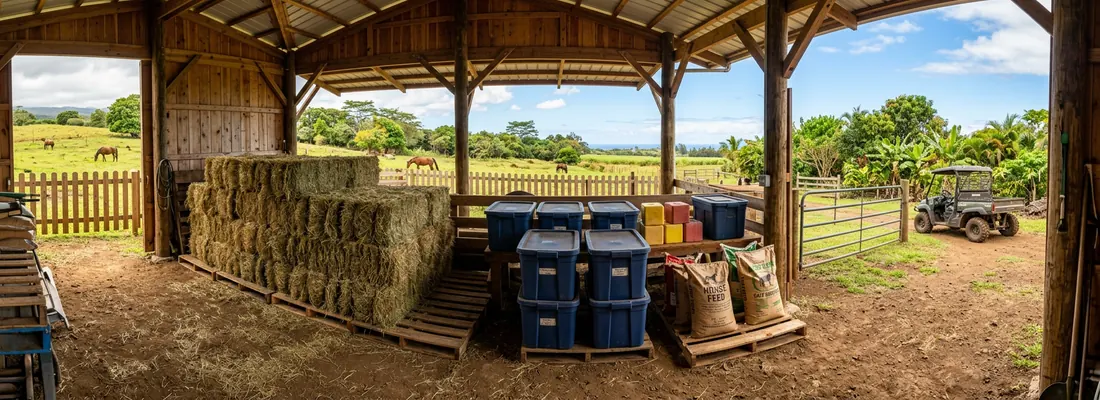
Keeping Feed Fresh: Hay & Grain Storage in Tropical Hawaii
· Miranda Country Store
Key Takeaways
- Store all hay bales on wooden pallets to prevent moisture wicking from the ground.
- Use airtight, metal, or heavy-duty plastic bins to protect grain from humidity and pests.
- Rotate your stock using the "First In, First Out" (FIFO) method to ensure freshness.
- Maintain adequate ventilation in storage areas to combat Hawaiʻi's high relative humidity.
- Protect metal storage buildings from volcanic emissions (vog) and salt spray to prevent corrosion.
Keep your livestock feed fresh and safe in Hawaiʻi's humid climate. Learn the best practices for tropical hay storage, airflow management, and pest prevention.
Effective tropical hay and feed storage requires maintaining low moisture levels, ensuring maximum airflow, and protecting supplies from pests. Due to high humidity, Hawaiʻi ranchers must elevate hay on pallets and use airtight containers for grain to prevent mold growth and maintain nutritional quality for livestock.
Key Takeaways
- Store all hay bales on wooden pallets to prevent moisture wicking from the ground.
- Use airtight, metal, or heavy-duty plastic bins to protect grain from humidity and pests.
- Rotate your stock using the "First In, First Out" (FIFO) method to ensure freshness.
- Maintain adequate ventilation in storage areas to combat Hawaiʻi's high relative humidity.
- Protect metal storage buildings from volcanic emissions (vog) and salt spray to prevent corrosion.
The Humidity Challenge: Why Feed Spoils Faster in Hawaiʻi
In the island environment of Hawaiʻi, the combination of high temperatures and consistent humidity creates a breeding ground for bacteria and mold. Unlike mainland storage environments, the tropical moisture allows fungi to thrive, leading to rapid fermentation and spoilage of uncovered or poorly stored animal nutrition supplies.
Excessive moisture can turn a high-quality bale of hay into a health hazard in just a few weeks. When humidity levels consistently exceed 70 percent, even the best animal feed becomes susceptible to clumpiness, nutrient degradation, and dangerous mold spores.
Preventing Mold and Mycotoxins in Tropical Hay Storage
How do you prevent mold in tropical hay storage?
To prevent mold in tropical hay storage, you must keep the moisture content below 15 percent and minimize exposure to humid air. This is achieved by utilizing elevated storage, maintaining a 12-inch gap between stacks and walls for airflow, and ensuring your storage facility has a leak-proof roof to prevent rain intrusion.
Mold isn't just a waste of money; it can be deadly. Mycotoxins, which are toxic compounds produced by certain molds, can cause respiratory issues, digestive upset, or even neurological problems in horses and cattle. Monitoring the "smell" of your hay is vital: it should always smell sweet and grassy, never musty or sour.
The Pallet Method: Maximizing Airflow for Stored Bales
Why should you use pallets for hay storage in Hawaiʻi?
Using wooden pallets for hay storage in Hawaiʻi prevents ground moisture from wicking into the bottom layer of bales. Pallets create an essential air gap that allows ventilation underneath the stack, which helps dissipate heat and moisture that otherwise leads to "bottom bale rot" and spontaneous combustion risks.
When stacking your hay, don't pack the bales too tightly. Leaving small gaps between columns of bales allows the air to circulate, which is your best defense against the heavy, stagnant air common in places like Keaau or Hilo. Check your pallets regularly for termites or rot, as the damp ground can attract pests that eventually move into your feed.
Choosing the Right Containers: Dealing with Pests and Humidity
What are the best containers for storing grain in Hawaiʻi?
The best containers for storing grain in Hawaiʻi are galvanized metal bins or heavy-duty plastic barrels with airtight, locking lids. These containers protect the feed from high humidity, which causes clumping, and provide a reinforced barrier against common pests like rodents, weevils, and various tropical insects that thrive in the islands.
Investing in high-quality storage protects your investment in premium agricultural supplies and nutrition. Ensure that any plastic bins used are BPA-free and UV-resistant if they are kept in areas with sun exposure. Metal remains the gold standard for keeping rats and mice out of your livestock's dinner.
Managing Your Inventory: The 'First In, First Out' Rule for Freshness
Managing inventory in the tropics requires discipline to ensure no bag or bale sits for too long. The "First In, First Out" (FIFO) method means you always usage the oldest stock before opening a new shipment. This prevents older feed from hidden corners becoming a reservoir for pests or mold.
Label your feed bins with the date of purchase using a simple piece of painter's tape or a dry-erase board. If you notice a bag is nearing its expiration or showing signs of moisture, prioritize using it immediately or discard it if mold is present. Proper rotation ensures your animals always receive the peak nutritional value from their diet.
Vog and Salt Air: Protecting Your Storage Infrastructure
On the Big Island, we face unique environmental factors like vog (volcanic smog) and salt air. These elements are highly corrosive and can eat through standard metal sheds or fencing materials and storage hardware. If your storage barn is made of metal, ensure it is treated with rust-resistant coatings.
Sulfur dioxide in vog can react with moisture to create a mild acidic effect. Always keep your feed containers tightly sealed to prevent these environmental particulates from settling on the feed. Periodically wash down the exterior of your storage buildings to remove salt buildup, which helps prolong the life of your infrastructure.
Ensuring your livestock has high-quality, fresh feed starts with how you handle the product the moment it leaves our store. If you have questions about the best storage solutions for your specific ranch layout, our expert team is always here to help you find the right tools for the job.
Frequently Asked Questions
How long can hay be stored in Hawaiʻi's climate?
In Hawaiʻi's humid climate, hay typically stays fresh for three to six months if stored properly on pallets with good airflow. Beyond six months, the risk of mold increases significantly, and the nutritional value begins to decline. Always inspect older bales for internal heat or a musty odor before feeding.
Is it better to store feed in plastic or metal bins?
Metal bins are generally better for Hawaiʻi because they are chew-proof against rodents and do not sweat as much as plastic. However, they can rust in salt air. Heavy-duty plastic bins with gaskets are excellent for humidity control but must be checked regularly for cracks or pest damage.
Can I store hay directly on a concrete floor?
No, you should never store hay directly on concrete in Hawaiʻi. Concrete is porous and allows moisture from the ground to seep upward, leading to rot in the bottom layer of bales. Always use wooden pallets or a raised wooden platform to provide an insulating air gap.
Visit Miranda Country Store
Keaau, HI 96749Open in Google Maps →